



Containers in Motion

10 Best Spice Rack Organizer Tips for Global Buyers?

Choosing the right Spice Rack Organizer can improve kitchen efficiency, product presentation, and customer satisfaction across international markets. Global buyers often compare capacity, materials, mounting methods, packaging, and shipping performance before placing an order. A compact rack may suit a small apartment, while a larger model fits restaurants, catering spaces, or family kitchens.

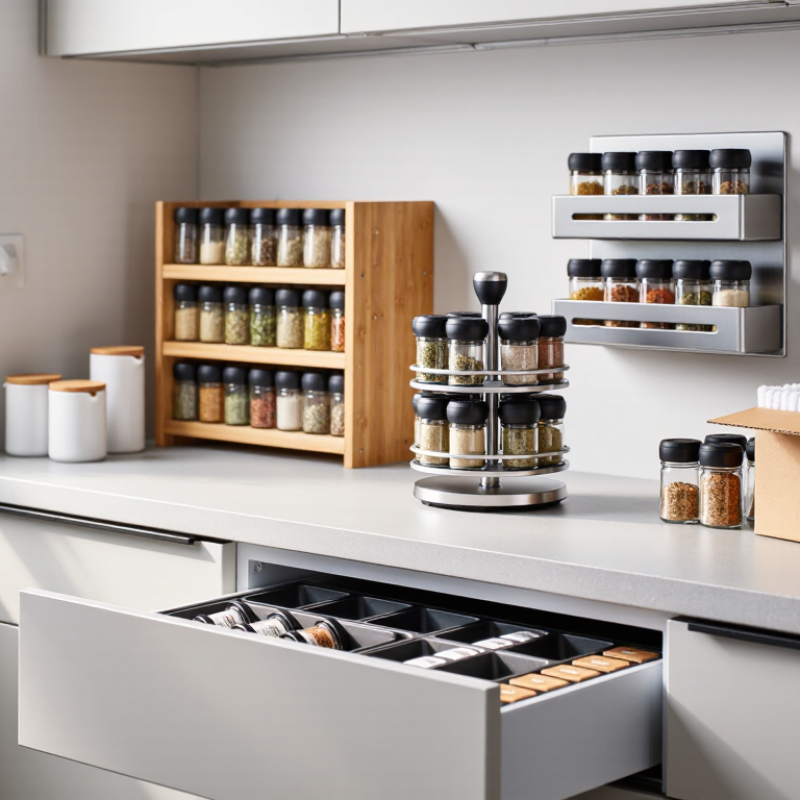
Small details matter. Check whether jars remain visible on narrow shelves. Examine the finish under bright store lighting. Stainless steel resists moisture, while bamboo offers a warmer appearance but needs careful sealing. Wall-mounted designs save counter space. Drawer organizers protect labels from grease and dust. Rotating models improve access, although their mechanisms may need stronger quality control.

Reliable purchasing requires more than attractive photographs. Buyers should request exact dimensions, load capacity, material descriptions, assembly instructions, and sample inspections. Packaging also deserves attention. A loose glass jar can damage the rack during transport. Regional kitchen layouts, humidity levels, and customer preferences can change the best choice.

There is no universal solution.

The following ten tips focus on practical selection, supplier communication, usability, and long-term value. They draw attention to details that are easy to overlook, including uneven cabinet doors, unclear labeling, unstable bases, and difficult cleaning. Some recommendations may need adjustment for a specific market. That is worth acknowledging. A product that performs well in a dry showroom may disappoint in a humid home. Careful testing, honest specifications, and feedback from real users help global buyers make more dependable decisions.
10 Best Spice Rack Organizer Tips for Global Buyers?

Assess Your Spice Collection, Cooking Habits, and Storage Needs

Assessing a spice collection starts with use, not shelf appearance. Empty every jar onto a clean counter. Group spices by cuisine, cooking frequency, and duplication. Three half-full chili powders usually signal a purchasing problem. USDA FoodKeeper guidance lists most dried spices at roughly two to four years for best quality. Mark purchase dates with a pencil. Smell older powders before deciding; weak aroma is a practical warning. Whole seeds often retain character longer than ground spices, but storage conditions still matter. My own first inventory usually reveals forgotten jars behind taller containers. That is useful evidence, not failure. Buyers should record household servings, preferred cuisines, and weekly cooking sessions.

Storage must match the routine. A daily cook may need a shallow drawer near the preparation area. Occasional users may prefer a compact cabinet organizer with clear labels. Measure shelf depth, door clearance, and jar height before ordering. Leave room for awkward containers. Global households may store blends, dried leaves, roots, and regional ingredients with different shapes. Humidity deserves attention, especially in coastal kitchens. Choose sealed containers and keep them away from steam. WRAP’s UK household food-waste research estimates 4.5 million tonnes of edible food are wasted annually. Spices are small, but duplicate buying adds up. I still over-label sometimes. A simpler system may work better: daily favorites at eye level, rare ingredients in a dated reserve section.

Measure Available Space Before Choosing a Spice Rack Organizer

10 Best Spice Rack Organizer Tips for Global Buyers

Measure the available space before choosing a spice rack organizer. This simple step prevents crowded shelves, blocked doors, and wasted corners. Measure width, depth, and height in millimeters or inches. Record the smallest measurement, not the largest one. Hinges, handles, and shelf lips also need clearance.

Houzz’s 2024 U.S. Kitchen Trends Study reports that 76% of renovating homeowners upgraded their cabinets. This signals growing interest in practical kitchen storage. However, a larger cabinet does not guarantee better spice access. Leave at least 10–15 millimeters beside a pull-out rack for smooth movement. Check the door opening angle, too.

I once measured the shelf correctly but ignored the hinge. That mistake made the organizer unusable.

Tips: Sketch the cabinet first. Mark pipes and uneven walls. For international buyers, compare metric dimensions carefully, because product listings may mix units. Choose adjustable shelves when jar heights vary. Keep frequently used spices between waist and eye level. A narrow rack may save space, yet it can become unstable when overloaded. Check its stated load capacity and mounting method. Measurement feels tedious, but guessing costs more. Recheck everything before ordering.

Compare Rack Designs, Materials, Capacity, and Accessibility

Global buyers should compare spice racks by access, not appearance alone. The Freedonia Group’s Home Organization Products report identifies kitchen storage as a continuing replacement and improvement market. This signals practical demand, but not unlimited cabinet space. Measure shelf depth, door clearance, and jar height before choosing a design. Tiered racks improve visibility, while pull-out units reduce reaching. Rotating trays work well in corners, but they can waste narrow cabinet space.

Material affects hygiene, durability, and shipping risk. Stainless steel resists moisture and is easy to wipe, while powder-coated steel can offer lower cost and color variety. Bamboo feels warm, but it needs careful sealing near sinks. Plastic is lightweight, yet thin parts may bend under heavy glass jars. It is not always the cheapest long-term choice. The International Trade Centre’s Trade Map data shows strong global movement in household storage goods, making packaging strength and corrosion protection important for international buyers. Inspect joints, load ratings, and surface finishes.

Capacity should reflect real usage. A rack holding 24 jars may become awkward when labels face sideways. Keep frequently used spices between waist and eye level. The U.S. Consumer Product Safety Commission recommends stable storage and secure placement for household items; that principle also applies to tall countertop racks. Accessibility matters more than maximum capacity. I would also question claims such as “universal fit.” Cabinets differ widely. Test one shelf first.

10 Best Spice Rack Organizer Tips for Global Buyers? - Compare Rack Designs, Materials, Capacity, and Accessibility

Tip / Organizer Type Rack Design Common Materials Typical Capacity Accessibility Best Use Buyer Checklist
1. Tiered Countertop Rack Open stepped shelves Powder-coated steel, stainless steel, bamboo 12–24 jars Excellent; labels remain visible from the front Frequently used spices on a worktop Check shelf depth, non-slip feet, and resistance to moisture and heat.
2. Wall-Mounted Shelf Rack Single or multiple fixed shelves Steel, aluminum, bamboo, engineered wood 12–36 jars Very good when mounted at eye level Saving counter and cabinet space Verify wall anchors, load rating, mounting-hole spacing, and local wall type.
3. Pull-Out Cabinet Rack Sliding vertical or horizontal organizer Steel frame, coated wire, plastic trays 12–30 jars High; contents can be pulled forward Deep cabinets and narrow gaps Measure cabinet width, depth, height, door clearance, and slide travel.
4. Full-Turntable Lazy Susan Circular rotating tray, often with a raised rim Food-grade plastic, bamboo, stainless steel 12–24 jars Excellent; rotates items from the back to the front Corner cabinets and pantry shelves Look for smooth 360-degree rotation, a stable base, and a raised edge.
5. Drawer Insert Organizer Angled or flat divided compartments Bamboo, molded plastic, coated metal 16–40 jars Very good when labels face upward Low drawers and clean visual storage Measure internal drawer dimensions and confirm jar diameter compatibility.
6. Magnetic Container System Magnetic tins attached to a steel surface Stainless steel tins, glass lids, magnetic bases 6–24 containers Good; containers can be rearranged individually Refrigerator sides, metal panels, and compact kitchens Confirm magnet strength, lid seal, rust resistance, and container volume.
7. Door-Mounted Rack Shallow baskets fixed to or hung on a cabinet door Steel wire, aluminum, ABS plastic 12–30 jars High; spices are presented at the front Unused cabinet-door surfaces Check door thickness, hinge capacity, closing clearance, and mounting method.
8. Stackable Modular Rack Interlocking shelves or expandable tiers Plastic, powder-coated steel, bamboo 12–36 jars Good; height can be adjusted to the collection Growing spice collections and rental kitchens Check stack stability, maximum tiers, adjustable spacing, and replacement parts.
9. Freestanding Rotating Tower Vertical carousel with multiple levels Steel, aluminum, ABS plastic 16–32 jars Very good; rotates to expose different sections High-capacity storage with a small footprint Assess center-of-gravity stability, turntable smoothness, and jar height.
10. Airtight Sealed Spice Box Compartmented box with individual lids Stainless steel, glass, food-grade plastic 6–12 compartments Moderate; labels or transparent lids improve identification Whole spices, blends, and humid climates Confirm gasket quality, odor resistance, food-contact suitability, and cleaning access.
Global buyer note: Capacity varies with container diameter and height. Before purchasing, compare the organizer's usable dimensions with local jar sizes, cabinet measurements, mounting standards, humidity conditions, and cleaning requirements.

Check Global Safety Standards, Packaging, and Compatibility

Global buyers should treat a spice rack organizer as a food-adjacent product, not merely a shelf accessory. Check material declarations, food-contact suitability, and test reports for every component. Requirements differ by destination, so ask a qualified compliance partner to confirm current rules. Inspect for odor, color migration, sharp edges, and unstable feet. A rack that tips when one jar is removed creates a household hazard. Keep records. Add the model number, batch code, care instructions, and required warnings in local languages.

Packaging needs equal attention. Use molded pulp, strong cartons, and a tested inner fit for long-distance handling. A practical trial includes vibration, compression, and drop checks from several carton sides. Glass containers need separation, not loose paper filler. Humidity also matters. Damp cartons can soften before arrival. I have seen attractive packaging fail at a warehouse corner because the base lacked support. That mistake was preventable.

Compatibility should be measured, not guessed. Record rack width, depth, height, jar diameter, shelf clearance, and mounting-hole spacing. Test square, round, and tapered containers. Leave enough finger space for removal. Check whether adhesives, magnets, or screws suit the destination surface. Do not assume one size fits every kitchen. Product photos can mislead. A dimension drawing and sample-fit video often prevent costly returns. Recheck measurements after tooling changes; small revisions can affect an entire shipment.

Evaluate Suppliers, Prices, Maintenance, and Long-Term Value

Global buyers should evaluate spice rack suppliers beyond attractive photographs. Request material specifications, load ratings, carton dimensions, and sample inspection records. Stainless steel, coated metal, and treated wood each suit different kitchens. Ask how suppliers control rust, sharp edges, and inconsistent welds. A reliable supplier should provide clear answers, stable communication, and documented quality checks.

Tip 1: Compare total landed cost, not unit price. Include tooling, packaging, freight, import duties, and replacement rates. A cheap rack may become expensive after damaged deliveries. Confirm minimum order quantities and production lead times in writing. I once underestimated packaging costs; the final margin was thinner than expected. That mistake still influences my purchasing checklist.

Maintenance affects long-term value. Choose removable trays, smooth corners, and surfaces that tolerate regular wiping. Avoid designs with narrow gaps where spilled powder becomes difficult to remove. Request cleaning guidance before placing a large order. Test one sample for staining, loose screws, and wobbling after repeated use. Small defects matter.

Tip 2: Build a simple supplier scorecard. Measure price, defect rate, response time, repair support, and delivery consistency. Give each category a practical weight. Tip 3: Recheck performance after three and six months. Photos from real kitchens can reveal fading, corrosion, or weak hinges that samples hide. Do not assume the first successful shipment proves lasting quality; it may not.