China Top 10 Ordinary Plywood Suppliers for Global Buyers?
China is a major manufacturing base for Ordinary Plywood, serving furniture, packaging, construction, and interior projects worldwide. Its supplier landscape is broad, but quality is not uniform. This guide examines ten Chinese suppliers for global buyers, focusing on production capability, product consistency, export experience, and documentation.
The analysis uses recognized industry references, including the FAO Global Forest Products Facts and Figures 2023, the ITTO Annual Review and Assessment of the World Timber Situation, and UN Comtrade trade data under HS code 4412. These sources help frame plywood demand, panel production, and international trade patterns. However, trade statistics cannot reveal every factory’s real performance. A large export volume does not automatically mean better Ordinary Plywood.
Reliable evaluation requires closer inspection. Buyers should compare veneer species, core construction, thickness tolerance, formaldehyde emissions, moisture resistance, surface sanding, and glue standards. Factory audits, recent test reports, sample inspections, and container-loading photographs add useful evidence. A supplier should also explain whether production is in-house or outsourced. That detail is often overlooked.
The shortlist is only a starting point. Some supplier websites provide impressive claims but limited technical proof. That deserves caution. Prices can also change with log costs, resin prices, currency movements, and shipping rates. The best choice depends on the project, destination standards, order volume, and acceptable risk. Global buyers should verify every critical specification before signing a purchase contract. Good judgment still matters.
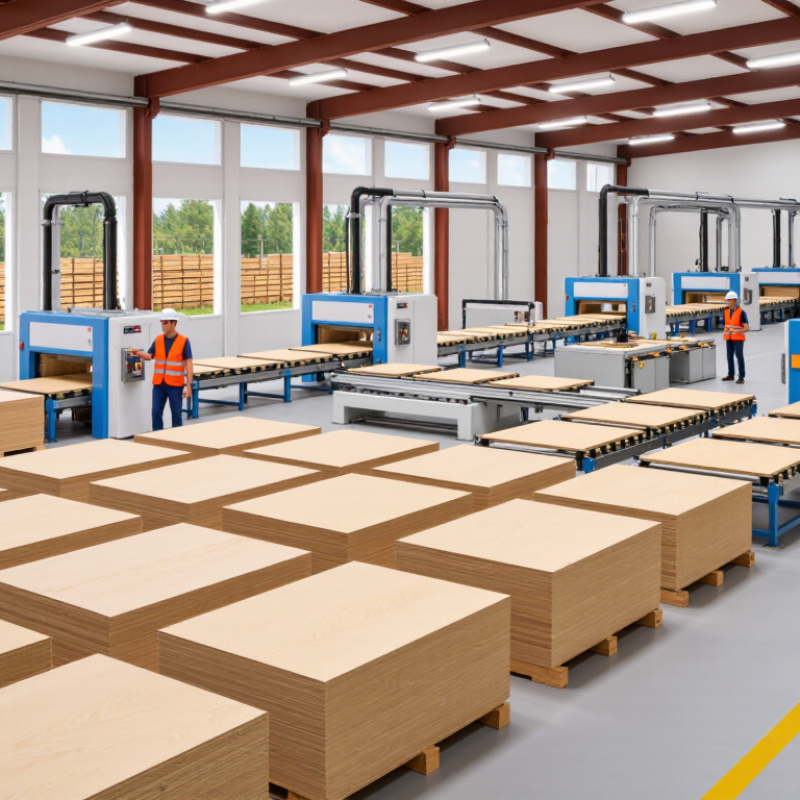
Commercial Plywood Scope: Grades, 3–25 mm Thickness, and GB/T 9846 Standards
Commercial plywood is a practical panel for furniture, cabinets, packaging, and interior construction. Under GB/T 9846, plywood is produced by bonding several veneer layers with crossing grain directions. Available thicknesses commonly range from 3 to 25 mm. A 3 mm sheet may suit drawer backs or light partitions. Panels from 12 to 18 mm are more common for cabinets and general furniture. A 25 mm panel offers greater stiffness, but it also adds weight and handling costs.
Grade selection requires careful interpretation. Trade terms such as A, B, and C usually describe face appearance, not complete panel performance. GB/T 9846 separates plywood by intended resistance, including weather-resistant, water-resistant, moisture-resistant, and non-moisture-resistant applications. Buyers should request test records for bonding strength, moisture content, thickness tolerance, and formaldehyde emissions. Do not treat a clean surface as proof of strong bonding.
Reliable sourcing also depends on physical inspection. Check random bundles for open joints, core gaps, edge damage, delamination, and warping. Small defects matter. Ask for veneer species, adhesive type, panel dimensions, packing details, and batch traceability. Export specifications can look precise on paper, yet factory results may vary between batches. I have seen buyers focus on face quality while overlooking thickness tolerance. That mistake can disrupt hinges, fittings, and cutting plans. Clear acceptance samples and independent inspection reduce that risk.
Ranking Method: Quality, Capacity, Export Records, FSC, and EN 13986 Compliance
China Top 10 Ordinary Plywood Suppliers for Global Buyers?
A practical ranking of China’s top ordinary plywood suppliers should begin with quality, not advertising. Inspectors can check veneer thickness, core gaps, surface repairs, and glue-line strength. A clean panel edge matters. So does consistent thickness across a full shipment. Samples alone are insufficient because production batches may vary.
Capacity is measured through verified factory output, drying equipment, pressing lines, and quality staff. Export records also deserve careful review. Shipping documents, destination markets, repeat orders, and dispute histories provide stronger evidence than a supplier’s claims. Buyers should request recent records, although some information may require confidentiality agreements.
FSC certification must match the correct factory, product scope, and certificate validity. A certificate number should be checked through the official certification database. For construction use, EN 13986 compliance requires suitable test reports, technical documentation, and applicable performance declarations. A laboratory report is useful, but it does not automatically prove every shipment complies.
The ranking can assign clear weightings: 30% quality, 20% capacity, 20% export records, 15% FSC status, and 15% EN 13986 evidence. Scores should be updated after factory audits. This is where rankings become imperfect. Test methods, local production changes, and incomplete records can affect results. Buyers should compare recent evidence, not rely on a fixed online list.
China’s Top 10 Ordinary Plywood Suppliers for Global Buyers
China’s Top 10 Ordinary Plywood Suppliers for Global Buyers should be judged by evidence, not catalog language. FAOSTAT forestry data repeatedly identifies China as the world’s leading wood-based panel producer. UN Comtrade records also place China among the largest plywood exporters. This scale creates choice, but quality still varies between factories, production lines, and batches.
A practical top-ten review should check veneer thickness, core gaps, moisture content, bonding strength, and sanding quality. Request recent laboratory reports, not copied certificates. ISO 12465 offers useful plywood testing guidance, while EN 314-2 helps assess bonding performance for many construction uses. Sample panels should be cut open. Look for dark glue lines, uneven cores, and repaired voids. Small details matter.
ITTO’s Biennial Review and Assessment of the World Timber Situation highlights China’s major role in global timber processing and trade. However, export volume alone cannot prove supplier reliability. A factory may provide attractive prices yet struggle with replacement panels or container scheduling. I would compare at least three production batches, inspect loading photos, and verify declared thickness with calipers. One weakness remains: public trade data often combines different plywood grades, so “top ten” rankings can be imperfect. Buyer feedback, factory audits, and consistent test results deserve greater weight than market size.
Buyer Due Diligence: ASTM D3043 Tests, Certifications, MOQ, and Lead Times
China Top 10 Ordinary Plywood Suppliers for Global Buyers?
When reviewing China’s top ten ordinary plywood suppliers, buyers should verify performance, not rely on catalogs. Request ASTM D3043 flexural test reports for the exact thickness and grade. Check bending strength, stiffness, specimen conditioning, and laboratory identification. A recent report matters more than a polished brochure.
Ask for product certifications that match your destination market. FSC chain-of-custody documents support responsible sourcing, while CARB Phase 2 or TSCA Title VI may apply to formaldehyde emissions. Confirm certificate scope, factory address, validity, and product coverage. An ISO certificate alone does not prove plywood quality. Independent laboratory testing adds stronger evidence.
MOQ can differ by thickness, core composition, face grade, and packaging method. Request a written MOQ for trial orders and repeat production. Lead times should include veneer preparation, pressing, sanding, inspection, and export packing. Sixteen to thirty days may be realistic, but seasonal congestion can extend schedules. Get a production timeline, not only a shipping promise. A pre-shipment inspection should check thickness, dimensions, bonding, surface defects, and moisture. Small inconsistencies are common. They deserve documented correction, not excuses. A low quotation may hide higher inspection and replacement costs. Suppliers should also explain rejected-batch handling, payment milestones, and traceability from logs to finished panels.
China Ordinary Plywood Supplier Due-Diligence Framework
This supplier-neutral screening framework gives the greatest review weight to ASTM D3043 test-report traceability and certification scope. Buyers should verify panel construction, specimen orientation, conditioning, test results, certification validity, MOQ, and shipment lead time directly with each supplier. The weighting is a purchasing framework, not a ranking or performance claim about any company.