7 Tips for Buying Mini Cake Boards in Bulk?
Buying a Mini Cake Board in bulk can reduce unit costs, but cheap pricing alone proves little. The wrong board may bend beneath a layered sponge, absorb buttercream moisture, or leave silver fibers near the cake edge. Bakery packaging consultant Elena Marquez says, “A reliable cake board should disappear beneath the cake, not disappear under pressure.” Her point is practical. Strength, cleanliness, and consistency matter more than a tempting carton price.
This guide explores seven buying tips for choosing the right Mini Cake Board in larger quantities. It considers board thickness, diameter accuracy, grease resistance, surface finish, and material safety. It also examines supplier samples, case counts, storage conditions, and delivery reliability. A board that works for a six-inch sponge may fail under a tall, chilled mousse cake. Test both weight and moisture exposure before placing a large order. Small tests prevent expensive surprises.
Look closely at the details.
Ask whether the material is suitable for direct food contact. Request product specifications, batch information, and clear packaging details. A dependable supplier should explain how boards are manufactured and protected during transit. Still, no supplier is perfect. Moisture can enter poorly sealed cartons, and printed dimensions may differ slightly from actual measurements. That is why photos are not enough. Handle samples yourself. Check the edges, flex the center, and place a finished cake on top. A thoughtful purchase balances price, performance, waste, and your bakery’s real production rhythm.
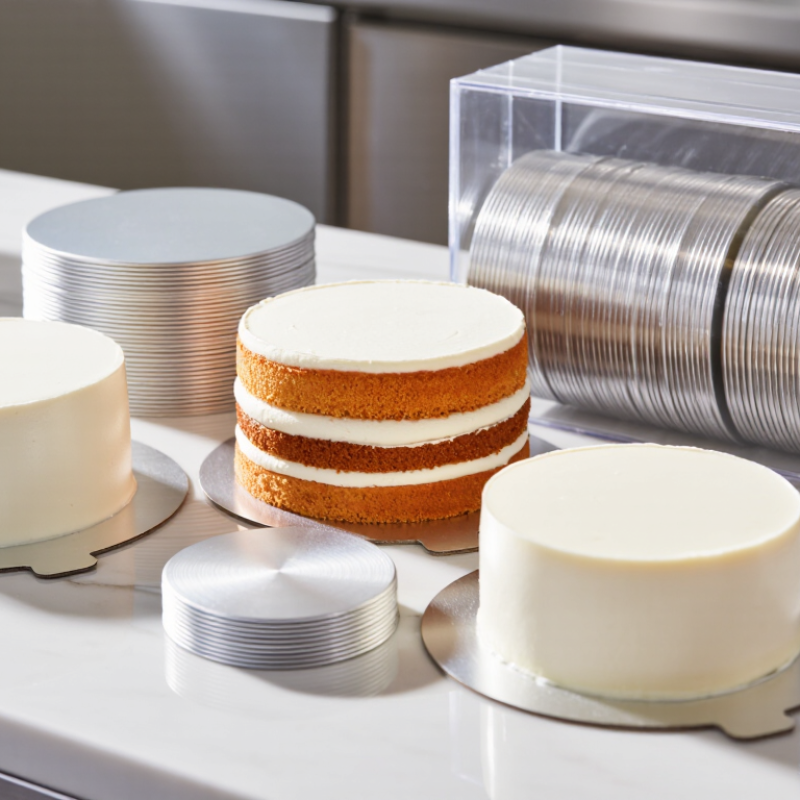
Understanding Mini Cake Board Sizes and Materials
Buying mini cake boards in bulk starts with accurate sizing, not the lowest unit price. Measure the cake’s widest point after frosting. A board should usually extend 1–2 inches beyond the cake. For a 4-inch cake, a 6-inch board gives enough room for lifting and decoration. Common mini sizes include 4, 5, 6, and 8 inches, but supplier measurements may vary slightly. Check the actual diameter, thickness, and edge finish before ordering.
Material affects stability and food safety. Coated paperboard is light and economical, while corrugated board offers better support for taller cakes. A 2–4 mm thickness often works for individual desserts, but heavier buttercream designs may need thicker construction. Look for food-contact documentation, moisture resistance, and smooth surfaces.
Avoid boards that bend when held with one hand. They fail quickly.
The FAO Yearbook of Forest Products reported approximately 417 million tonnes of global paper and paperboard production in 2022. That scale supports broad material availability, but it does not guarantee consistent quality. The U.S. EPA’s 2018 packaging data also recorded paper and paperboard as a major recycled packaging stream. Ask whether the board uses recycled content and whether its coating affects recycling.
I once ordered a cheaper batch with attractive dimensions, but the surface softened under condensation. I still recheck moisture performance. Bulk savings mean little when every cake needs a replacement board. Compare samples, carton compression, minimum order quantity, and storage humidity before committing.
Calculating Bulk Quantities for Your Baking Needs
7 Tips for Buying Mini Cake Boards in Bulk?
Calculating bulk quantities begins with a realistic order forecast. Review four to six weeks of sales, not one unusually busy weekend. Count boards used for each cake, including replacements for damaged edges. If every order needs one board, multiply expected cakes by board usage. Simple math helps.
Add a reserve of 10 to 15 percent for spills, trimming mistakes, last-minute orders, and quality checks. A bakery producing 180 mini cakes monthly may need 207 boards with a 15 percent buffer. Round upward to the supplier’s carton size. Do not round blindly. Confirm each carton’s actual count.
Measure the cake diameter against the board’s usable surface. A board that looks generous may leave little room for piping or lifting. Check thickness, moisture resistance, and storage space before ordering several cartons. Keep cartons flat, dry, and away from heat. Track opening dates and remaining stock weekly. I sometimes overestimate holiday demand, so I separate regular stock from seasonal stock. Reordering sooner may cost more per unit, but excess inventory can cost more. Ask for a sample carton when specifications seem unclear.
7 Tips for Buying Mini Cake Boards in Bulk
Calculating Bulk Quantities for Your Baking Needs
The recommended quantity includes a 10% allowance for damaged boards, handling mistakes, and unexpected orders. For example, producing 500 mini cakes requires approximately 550 cake boards. When buying in bulk, round the result up to the nearest available pack size and review storage space, board diameter, thickness, moisture resistance, and delivery time before placing an order.
Comparing Suppliers, Prices, and Minimum Order Requirements
Buying mini cake boards in bulk requires more than finding the lowest unit price. Compare at least three suppliers using identical specifications: diameter, thickness, material, finish, and pack size. Ask for a physical sample. A glossy board may look strong but bend under a moist sponge. Check edge quality, grease resistance, and whether the surface marks white frosting. Record lead time, shipping cost, and replacement policy in one table. Small details matter.
Minimum order quantity can change the real price.
One supplier may quote $0.08 per board but require 20,000 pieces. Another may charge $0.11 for only 3,000 pieces. Calculate total landed cost, including cartons, freight, taxes, and storage. Avoid buying a full year’s stock before testing demand. I once underestimated warehouse space; cartons blocked a packing aisle for weeks. That mistake was avoidable. Ask whether mixed sizes count toward the MOQ. Confirm custom printing thresholds separately.
Check production consistency by requesting recent batch photos and acceptable tolerance ranges. Reliable suppliers explain material sources, inspection steps, and delivery delays clearly. Request written terms for payments and defective goods. A low deposit is not always safer when communication remains vague. Compare response speed, not only quotations. Before ordering, run a small trial with your actual cake, filling, and refrigeration process. Some boards survive transport but soften overnight. Recheck the figures afterward; my first comparison ignored seasonal freight increases. That oversight was real.